David Olusoga urges Brits to discover stories behind war memorials
Every November, millions of people gather at war memorials across Britain to remember those who served and sacrificed. Yet while these monuments remain powerful symbols of national remembrance, new research by UK family history website Findmypast suggests many of the stories behind the names engraved on them are being lost.
The study found that, while 84% of people believe that local memorials continue to play an important role in their community ensuring wartime sacrifice is not forgotten, 73% worry that the individual stories behind the names are being lost. In fact, 1 in 3 could not locate their local war memorial, while 70% are not sure they could name even one person commemorated.
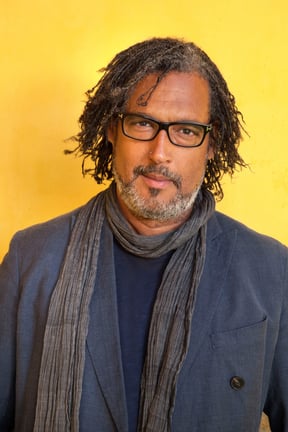
To help address this disconnect, historian, broadcaster and author David Olusoga has partnered with Findmypast to launch Military Lives, a free digital tool designed to reconnect people with the lives behind Britain's memorial inscriptions.
By linking national memorial records from across the UK with millions of historical records like census returns, military records, and newspapers, the tool enables people to move beyond dates and ranks and discover the real people, families, occupations and communities behind the names. Uniquely, it also maps the connections between those named on a memorial, revealing previously hidden links between individuals, including family members, neighbours, workmates, and comrades-in-arms.
David Olusoga described the initiative as an opportunity to transform how communities engage with their wartime history.
He said: "War memorials are among the most familiar historical landmarks in Britain, but for many of us the names engraved on them have become distant and anonymous. Yet every inscription represents a life that extended far beyond military service and a loss that was felt by families, neighbours, workplaces, and entire communities.
“This tool offers people an accessible and immersive way into the stories of their local area, bringing the true human impact of this tragic event into focus. Incredible new details can be uncovered when names on memorials are connected to the historical records – and the community – that surround them.”
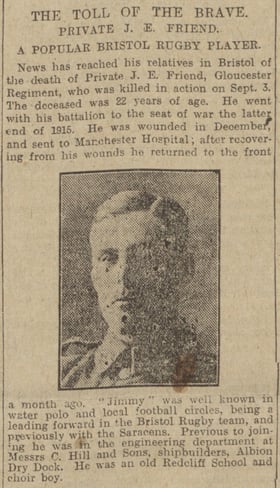
As part of the project, Olusoga explored the story of James “Jimmy” Friend, whose name appears on a memorial in his home city of Bristol. What began as a single memorial inscription revealed a rich and complex life story.
Friend was not simply a soldier; he was a rugby player who represented Bristol clubs including the Saracens, an engineer employed in the city's dockyards, and the son of a local female publican. Noted as one of the first volunteers for Bristol's Own ‘Pals’ Battalion at the start of the First World War, he survived a serious injury before eventually losing his life just two days after his return to the Western Front in 1916.
"What struck me about Jimmy was not only the tragedy of his death, but the richness of the life he lived before the war,” said Olusuga. “He was a school choirboy, a keen sportsman, a son, a colleague and a friend. By uncovering stories like his, we can begin to see these memorials not simply as monuments to conflict, but as memorials to individuals whose lives helped shape the communities we know today.
“This Remembrance, I’d encourage everyone to visit your local memorial, choose one name, and go online to discover their story."
The project marks the first time large-scale machine learning has been used to connect the UK's war memorial data with millions of historical records and newspaper archives. Currently covering 65,000 soldiers on 9,000 memorials – one in every city, town and village across England, Scotland, Wales and Northern Ireland – the long-term aim is to broaden its coverage to connect all soldiers on the 22,000 local memorials with their stories.
Researchers hope that the tool will tap into a growing public desire to reconnect with local wartime stories. More than half of respondents (51%) said they would like to know more about the people remembered on local memorials, while 59% believe Remembrance would feel more meaningful if they understood the lives behind the names.
Interestingly, when it comes to observing Remembrance Day itself, it is the younger generation that is searching for individual human stories. Gen Zs are twice as likely to visit a local war memorial and three times more likely to research the story of a family member than Baby Boomers, who prefer to buy a poppy (70%) or observe the two-minute silence (62%).
Jen Baldwin, Research Specialist at Findmypast said:
"War memorials were never intended to be lists of names alone. They were created to ensure people and stories would not be forgotten. Our research shows that many people are searching for that connection and want to know more about the lives of those that came before them in their local area.
"We believe that every story matters. By using technology to bring together the UK's memorial data, historical records and newspaper archives on Findmypast, we're helping people uncover the human stories within their communities, to understand more about those who made the ultimate sacrifice."
This Remembrance Day, search and remember those who gave their lives in your community for free: https://www.findmypast.co.uk/discover/world-war-i/memorials